Your guide to growing food at home and turning it into simple, healthy meals you’ll actually enjoy cooking and eating.

From the Master’s Garden
The Garden Was Always the First Kitchen
Rediscovering Potage Printanier, by Marie-Antoine Carême • c.1822
Some recipes tell us more than how to cook.
They tell us how people used to live.
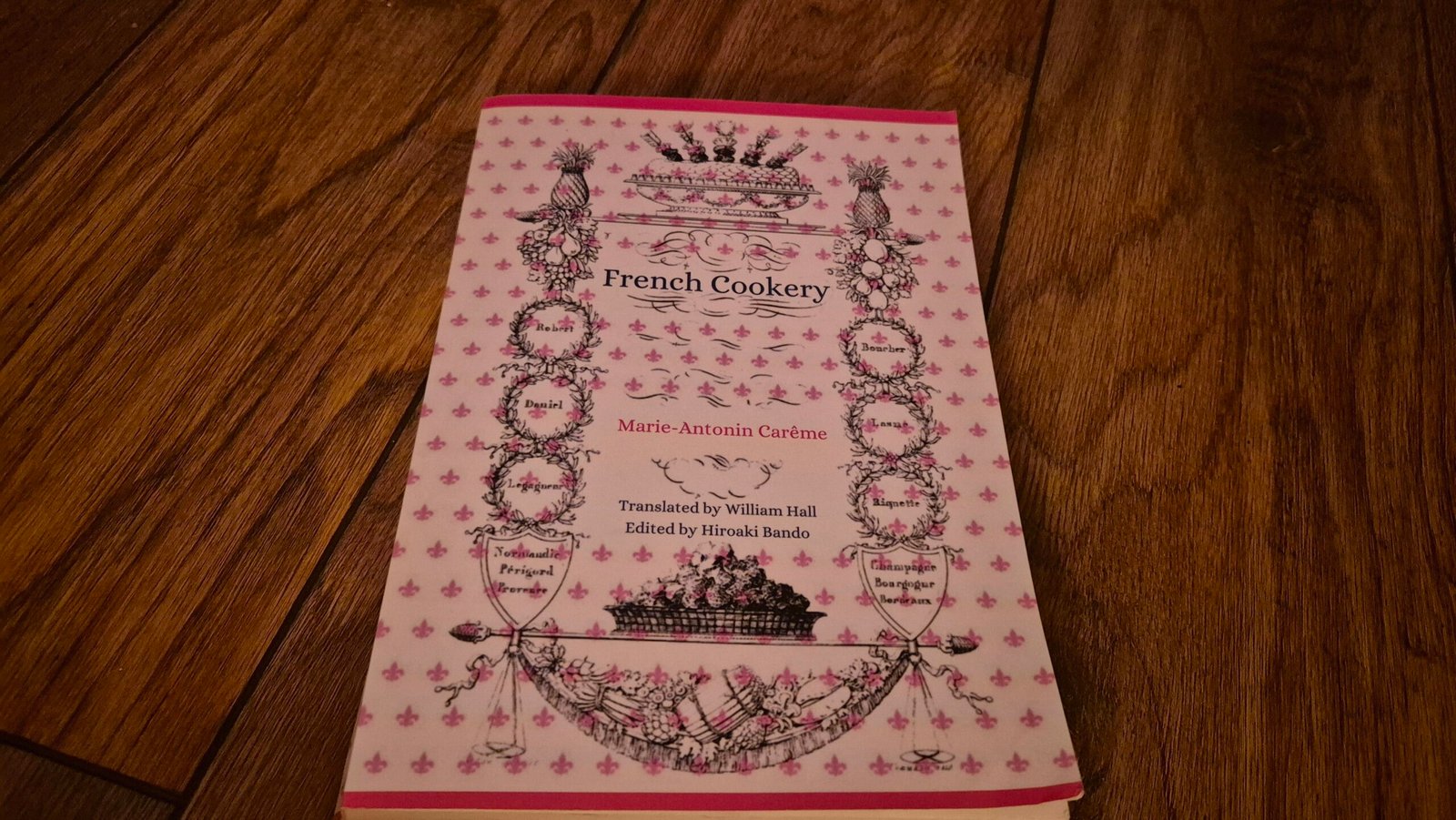
Recently, while reading Marie-Antoine Carême’s French Cookery, I came across a recipe that immediately captured my imagination: Potage Printanier (Spring Garden Soup).
I wasn’t fascinated by the technique.
It was the garden behind it. The garden.
Carême, one of the great pioneers of French cuisine, is often remembered for his glorious banquets, his elegant pastries, and his exceptional culinary talent. Yet among those lauded creations are recipes that demonstrate a far quieter philosophy , one based on seasonality, freshness and respect for nature.
The best kitchens relied on potagers, or kitchen gardens, long before supermarkets. These gardens provided the vegetables, herbs and edible flowers for the day, so cooks were working with ingredients at their very best.
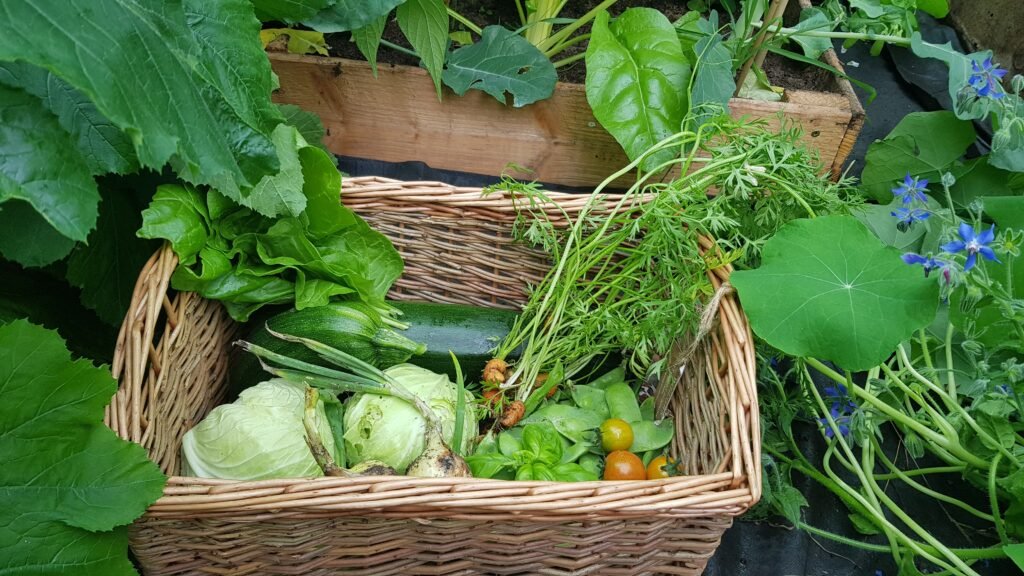
The garden was not apart from the kitchen.
It was the kitchen.
One of the most beautiful examples is the Potage Printanier.
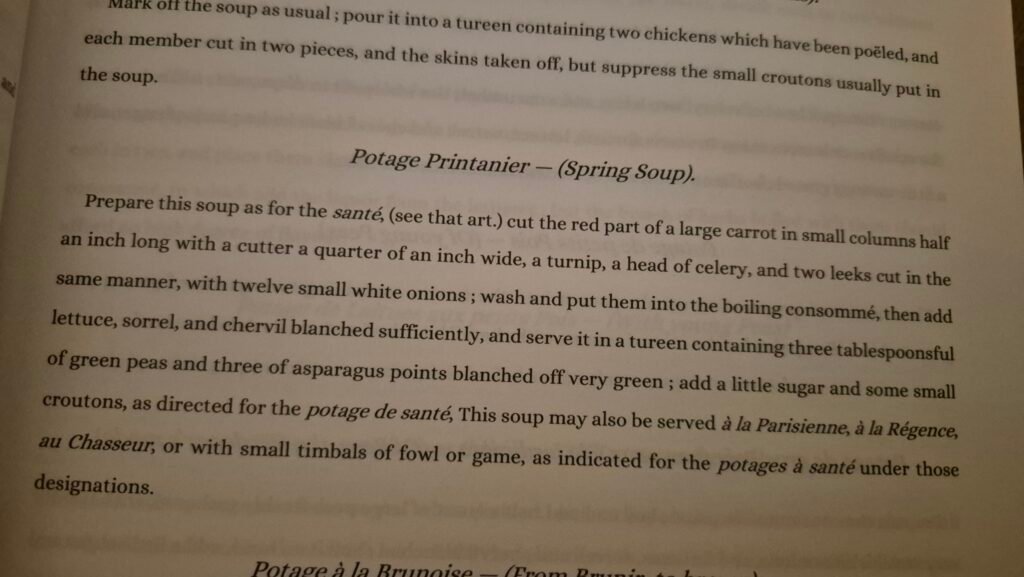
Carême’s soup is made with the first gifts of spring: young carrots, turnips, celery, leeks, onions, lettuce, sorrel, chervil, green peas and asparagus tips. Each vegetable is cooked gently to keep its colour, freshness and delicate flavour. Rather than cover up the ingredients with a lot of seasoning, this recipe lets each vegetable hold on to its own personality.
Reading those ingredients, I knew this was not just a soup.
It was a celebration of the season.
It made me remember that the best chefs didn’t begin with complicated recipes.
They started with exceptional ingredients.
I stood in my own garden, basket in hand, and I found myself wondering how many generations of cooks have begun their day in just such a way—wandering among vegetables and herbs, collecting whatever the season was ready to give.
That, perhaps, is the lesson Carême still teaches us today.
Excellence doesn’t start in the kitchen.
It starts in the soil.
I want to rediscover these forgotten links between the garden and the table, which I will do at Nature on a Plate. Using historic cookbooks, kitchen gardens and classic recipes, I’ll show how the world’s great chefs have been inspired by nature, and how we can bring those ideas into our own gardens now.
Perhaps because the most modern thing we can do is also the oldest.
Sow a seed.
Gather with the seasons.
Cook carefully.
And remember where every great meal actually begins.
From the Library
French Cookery by Marie-Antoine Carême
This week’s inspiration: Potage Printanier (Spring Garden Soup)
Researched in the past. Grown in garden. Designed for today.